
The business-to-business landscape is evolving faster than ever. What worked in 2023 or 2024 is no longer enough to capture the attention of modern decision-makers. Today’s B2B buyers act more like B2C consumers—they want personalization, speed, and immense value before they even speak to a sales rep. To stay ahead of the competition, implementing the right b2b digital marketing strategies right from the start of your fiscal year is absolutely critical.
In this comprehensive guide by LeadSmart, we will break down the most effective, data-backed tactics that are actually driving revenue and pipeline growth this year.
Table of Contents
- 1. The Changing Face of B2B Buyers in 2026
- 2. Top 5 B2B Digital Marketing Strategies for Maximum ROI
- 3. How to Execute These Strategies Successfully
- 4. Key Metrics to Measure Your Marketing ROI
- 5. Conclusion: Dominate Your Market Today
1. The Changing Face of B2B Buyers in 2026

Before diving into tactics, we must understand the 2026 buyer. According to recent insights from authoritative bodies like Gartner, the typical B2B buying committee now consists of 6 to 10 decision-makers, and they complete 70% of their research independently online before engaging a vendor.
If your brand isn’t visible during that independent research phase, you’ve already lost the deal. This is why upgrading your b2b digital marketing strategies is no longer optional; it is a matter of business survival. You need a proactive approach that builds trust and establishes your company’s absolute authority in your specific niche.
2. Top 5 B2B Digital Marketing Strategies for Maximum ROI
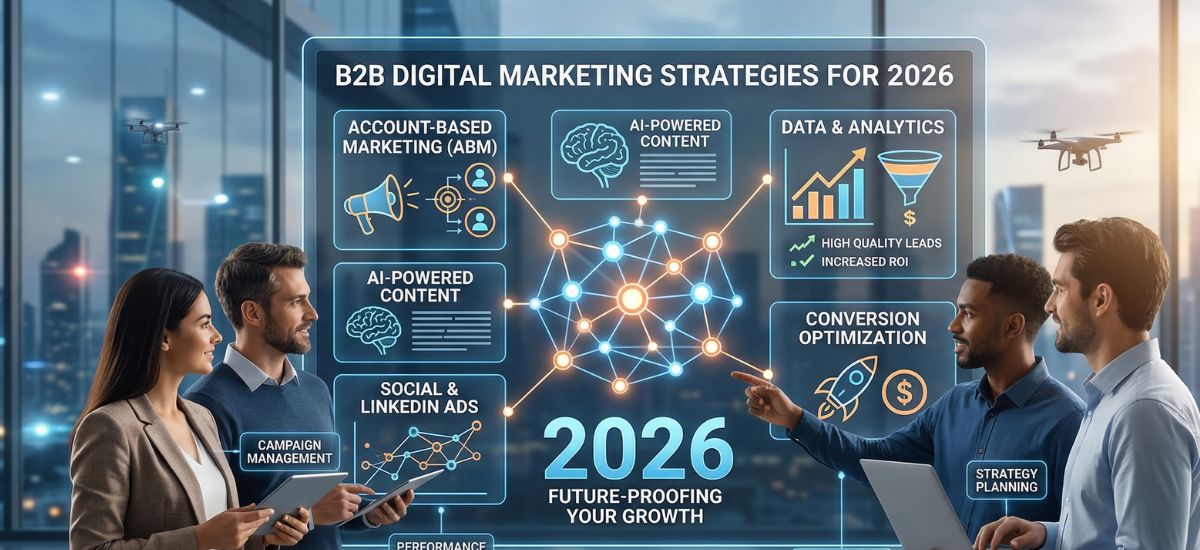
Through our extensive experience helping enterprises scale, we have identified five core pillars that generate the highest Return on Ad Spend (ROAS) and lead quality. Here are the top b2b digital marketing strategies you need to adopt today.
Strategy 1: AI-Powered Account-Based Marketing (ABM)
Account-Based Marketing isn’t new, but how we execute it in 2026 is entirely different. Instead of manually researching target accounts, successful teams are using predictive AI models to identify which companies are currently in the market for their services.
When we talk about modern b2b digital marketing strategies, hyper-personalized ABM sits at the top. By integrating generative AI, you can automatically create custom landing pages, personalized email sequences, and targeted LinkedIn ads for each specific account. This ensures that your messaging speaks directly to the unique pain points of that specific CEO or CTO.
Strategy 2: Capturing Leads in “Dark Social”
Dark social refers to the untrackable spaces where B2B buyers share information and ask for recommendations—think private Slack communities, Discord servers, WhatsApp groups, and direct messages on LinkedIn.
A critical element of highly successful b2b digital marketing strategies involves creating content that is highly shareable within these hidden networks. Instead of gating all your best content behind lead forms, give your best insights away for free. Create easily digestible infographics, thought leadership podcasts, and native social posts that buyers naturally want to share with their colleagues internally.
Strategy 3: Optimizing for Zero-Click Searches
Search engines have evolved. With AI-generated overviews answering user questions directly on the search results page, users often don’t need to click on a website link to get their answer.
If your b2b digital marketing strategies do not account for zero-click searches, you are losing massive brand visibility. To adapt, you must optimize your content for Google’s AI Overviews. This means formatting your content with clear, concise answers, using bullet points, and directly answering the “Who, What, Why, and How” of your industry right at the top of your web pages.
Strategy 4: Engaging Decision-Makers with Interactive Video
Static whitepapers are losing their appeal. The modern executive prefers high-impact, short-form video content. However, the most effective b2b digital marketing strategies take this a step further by using interactive video.
Imagine a product demo video where the viewer can click on different features within the video player to explore what matters most to them. This creates an engaging, choose-your-own-adventure experience that keeps prospects on your site longer and significantly boosts conversion rates.
Strategy 5: Building a First-Party Data Goldmine
With the complete phase-out of third-party cookies, relying on external data to target ads is no longer viable. Trust and privacy are the new currencies of the internet.
Consequently, forward-thinking b2b digital marketing strategies must heavily prioritize the collection of first-party data. You can do this by creating high-value proprietary tools, interactive calculators, or exclusive newsletters. When you own the data, you control the relationship, allowing you to build highly accurate retargeting campaigns.
3. How to Execute These Strategies Successfully
Knowing what to do is only half the battle; execution is where companies win or lose. To properly implement these b2b digital marketing strategies, you must ensure complete alignment between your sales and marketing departments.
- Audit Your Current Tech Stack: Ensure your CRM and marketing automation tools are fully integrated. https://aws.amazon.com/what-is/business-transformation/
- Establish Feedback Loops: Sales must tell marketing which leads are actually closing, so marketing can refine their targeting.
- Start Small: Don’t try to deploy all these tactics at once. Pick one area—like AI-driven ABM—master it, and then expand.
4. Key Metrics to Measure Your Marketing ROI
You cannot scale what you cannot measure. When evaluating your campaigns, move away from vanity metrics like mere website traffic or social media “likes.”
Instead, track the metrics that impact the bottom line:
- Customer Acquisition Cost (CAC)
- Pipeline Velocity
- Marketing Originated Customer Percentage
- Win Rate of Target Accounts
5. Conclusion: Dominate Your Market Today
The landscape of B2B marketing has shifted from aggressive outbound selling to building authoritative, trust-driven digital ecosystems. By shifting your focus toward AI personalization, dark social, and first-party data, you aren’t just reacting to the market—you are leading it.